
Thermoplastic road markings have become the standard for highways, intersections, and pedestrian areas due to their durability and visibility.
But behind every vibrant line on the pavement is a precise process of preparation. At the core of this process lies the kneading machine in construction, a specialized piece of equipment designed to blend, melt, and cook thermoplastic paint to the exact consistency required for road marking applications.
Let’s explore what a kneading machine is, how it works, and why it is essential for creating cost-effective road markings.
What is a Kneading Machine?
A kneading machine is an industrial mixer engineered to prepare thermoplastic paint. Unlike conventional mixers, it is built to withstand high heat while maintaining precise temperature control.
The machine combines pigments, resins, and other additives into a uniform mixture, ensuring consistency in both texture and color.
By doing so, it supports the essential qualities of thermoplastic markings: even flow, strong adhesion, and resistance to wear. Without this careful preparation, road markings risk becoming brittle, uneven, or faded within a short period of use.
A Guide on How a Kneading Machine Works
The kneading machine functions through a combination of controlled heating and thorough mixing. Each stage ensures the thermoplastic paint achieves the proper viscosity for application.
Step 1: Loading Raw Materials
The process begins by placing solid thermoplastic paint blocks or granules into the hopper. Pigments and glass beads are included depending on the specification.
Step 2: Melting and Heating
Internal burners or heating coils raise the temperature of the mixture. The machine maintains this within a precise range, usually between 180°C and 220°C, to ensure the material melts evenly without burning or discoloring.
Step 3: Kneading and Mixing
Heavy-duty paddles or blades continuously stir the mixture. This eliminates clumps, distributes pigments evenly, and ensures that resins and additives integrate fully. Proper kneading is critical for maintaining viscosity and avoiding premature solidification.
Step 4: Temperature Monitoring
Sensors within the machine constantly monitor heat levels. Any deviation can cause issues such as over-thickened paint, uneven color, or weak adhesion.
Step 5: Discharge for Application
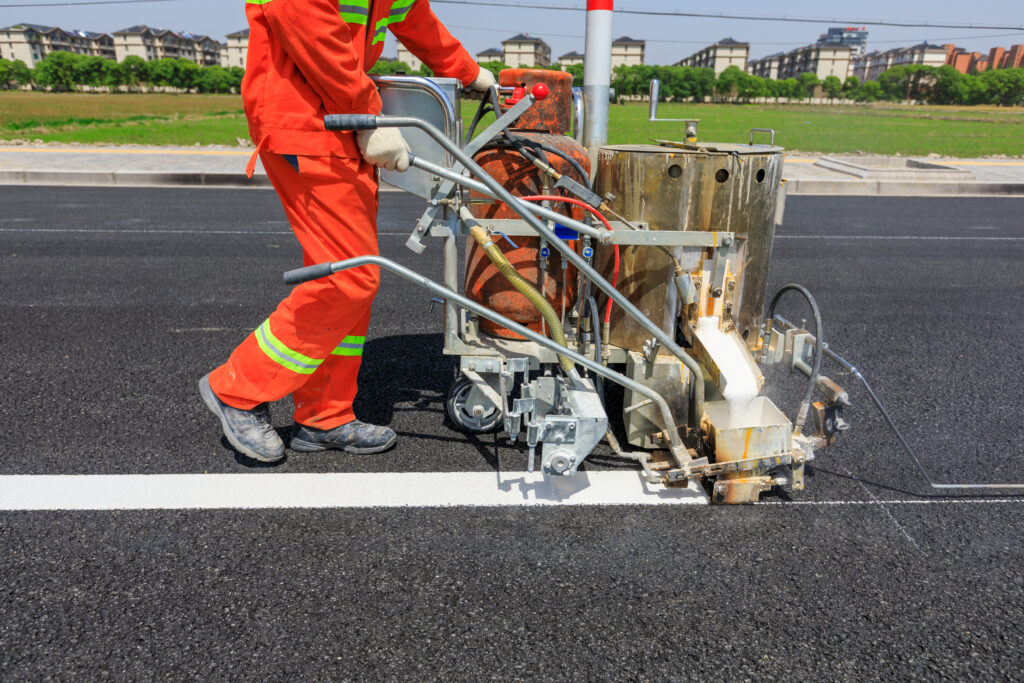
Once the paint achieves the correct viscosity, the material is discharged directly into the road marking applicator. From here, contractors use line marking equipment to apply paint with precision on roads.
This process guarantees that the thermoplastic paint flows smoothly through the applicator, forming consistent lines that withstand traffic and weather conditions.
What are the Factors that Affect Kneading Machine Performance?
Several variables influence how effectively a kneading machine in construction prepares thermoplastic paint. Contractors and suppliers must pay close attention to the following:
- Temperature Stability: Maintaining the recommended heat range ensures the paint does not char or lose its chemical integrity
- Mixing Speed: Blades must rotate at the right pace to balance thorough blending without introducing air pockets
- Batch Size: Overloading the kneader can lead to uneven heating and reduced efficiency
- Paint Formulation: Different paints may require specific adjustments in heating time and mixing strength
- Machine Quality: Precision engineering and durable materials make the difference between consistent, high-quality paint output and costly rework
By controlling these factors, operators secure a uniform product that results in sharp, durable markings.
5 Advantages of Using a Kneading Machine in Construction
The use of a construction kneading machine brings several advantages for distributors handling large-scale road projects:
1. Consistency of Output
Each batch of thermoplastic paint comes out with uniform viscosity, allowing for a smooth and even flow during application. This reliability helps minimize on-site errors and reduces the need for rework.
2. Preservation of Color Integrity
Controlled heating keeps the paint from burning or discoloring. As a result, road markings remain bright and highly visible in different weather conditions.
3. Improved Durability of Markings
Thorough kneading ensures stronger adhesion to the pavement. This produces lines that stay intact longer, resisting cracks, peeling, and fading.
4. Operational Efficiency
The kneading machine handles melting, mixing, and temperature control in a single process. This integration reduces preparation time and helps keep projects on schedule.
5. Cost-Effectiveness
By reducing waste and eliminating repetitive tasks, contractors can save on expenses. The long-term efficiency also benefits government clients managing road budgets.
Build Safer Roads with Rua Seguridad
The quality of road markings depends not only on the paint used but also on how well it is prepared. A kneading machine in construction ensures that thermoplastic paint is blended, heated, and cooked at the right conditions to achieve consistent viscosity and long-lasting color integrity. Without this step, even the best paint formulation risks underperforming.
Rua Seguridad understands these demands. By offering advanced kneading machines alongside a complete line of road marking equipment, the company provides contractors and distributors with the tools needed to deliver safe and clear road markings.
Contact us today to learn more about our thermoplastic paint solutions and equipment for your next road project.