
Cold Mix Asphalt Philippines: Benefits, Uses, and Best Practices
Cold mix asphalt in the Philippines has become one of the most practical solutions for road repair and maintenance — and for good reason. In a country where typhoons, heavy monsoon rains, and intense tropical heat consistently damage road surfaces, contractors and local government units (LGUs) need repair materials that work under real-world conditions: wet roads, unpredictable weather, and tight project timelines.
Unlike hot mix asphalt, cold mix is ready to use straight from the bag. No heating plant. No expensive equipment. No waiting for ideal weather. That flexibility makes it the go-to material for pothole repairs, emergency patching, and rural road maintenance across Luzon, Visayas, and Mindanao.
This guide covers everything you need to know — what cold mix asphalt is, why it suits Philippine conditions, how to apply it correctly, and how it compares to hot mix in practical terms.
What Is Cold Mix Asphalt?
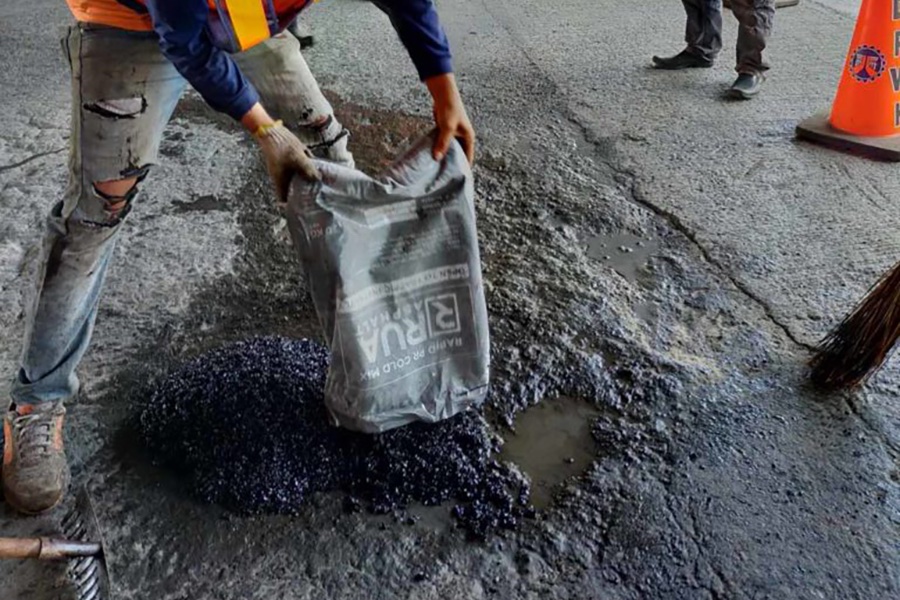
Cold mix asphalt is a pre-blended road repair material made from aggregate and a bitumen-based binder — typically emulsified bitumen — that allows the mixture to remain workable at ambient temperature. Because it doesn’t require heating before use, crews can apply it directly from the bag or bucket without specialized asphalt plant equipment.
This is fundamentally different from hot mix asphalt (HMA), which must be produced at temperatures of 150°C–180°C and applied immediately before it cools. Hot mix is well-suited for major highway construction, but it’s impractical for the kinds of fast, localized repairs that Philippine roads constantly demand.
Cold mix asphalt is available in two main variants suited to local conditions:
- All-weather cold mix — designed for use on wet or damp surfaces, making it suitable for rainy season repairs
- Dry-condition cold mix — optimized for dry weather application, offering stronger long-term bonding under ideal surface conditions
For product specifications, see Rua Seguridad’s Cold Mix Asphalt solutions page.
Why Cold Mix Asphalt Suits the Philippines
The Philippines faces road maintenance challenges that are unlike those in temperate countries. Specifically, local conditions include:
- Average annual rainfall of 1,500–4,000 mm, concentrated in a June–November rainy season that makes dry-surface hot mix application impractical for months at a time
- Pavement surface temperatures regularly exceeding 55°C during summer months in Luzon and the Visayas
- Frequent flooding in low-lying areas that accelerates pavement deterioration and generates pothole clusters
- Thousands of kilometers of barangay and provincial roads maintained by LGUs with limited equipment budgets
Traditional hot mix asphalt addresses none of these realities well. Furthermore, the Department of Public Works and Highways (DPWH) has recognized that cold mix solutions provide a viable alternative for emergency repairs and routine maintenance on roads where hot mix logistics are not feasible.
Cold mix asphalt, therefore, isn’t just a convenience — it’s a practical necessity for maintaining safe, passable roads across the country.
5 Key Benefits of Cold Mix Asphalt in the Philippines
1. No Equipment Needed — Ready to Use Immediately
One of the most significant advantages of cold mix asphalt is that it requires no heating equipment, asphalt plant, or specialized machinery. Crews can apply it using basic compaction tools — even a hand tamper or vibrating plate compactor — which is critical for barangay-level maintenance crews or remote repair projects far from urban centers.
This accessibility means that LGUs and small contractors can respond to road damage within hours of identification, rather than waiting days for equipment mobilization.
2. Works in Wet and Humid Conditions
Unlike hot mix asphalt, which cannot be applied to wet or damp surfaces, high-quality all-weather cold mix is specifically formulated to bond even in moderate moisture conditions. This matters enormously in the Philippines, where the rainy season makes road surfaces continuously wet for months.
As a result, road agencies no longer need to halt all maintenance activity during the wet season. Instead, they can continue emergency repairs and keep roads passable throughout typhoon season.
3. Reduces Traffic Disruption
Because cold mix asphalt is fast-curing and road sections can reopen to traffic within 24–48 hours of application (sometimes sooner for light traffic), it minimizes the lane closures and congestion caused by extended repair work. On busy urban roads in Metro Manila, Cebu, or Davao, this is a measurable benefit for both commuters and commerce.
4. Lower Equipment and Mobilization Cost
Cold mix eliminates the need for expensive asphalt heating trucks, mixing plants, and large compaction rollers. This reduces project overhead substantially — particularly for smaller LGU-funded repair programs where equipment rental costs would otherwise consume a disproportionate share of the maintenance budget.
5. Long-Lasting When Properly Applied
When crews prepare the repair surface correctly and use an appropriate compaction method, cold mix asphalt provides durable repairs lasting 1–3 years depending on traffic volume and weather conditions. For emergency pothole filling or temporary patches ahead of a full resurfacing project, that service life is more than sufficient.
For a broader look at Rua Seguridad’s road maintenance materials — including bitumen products — visit the Beyond Road Markings solutions page.
Common Applications of Cold Mix Asphalt in the Philippines
Cold mix asphalt is versatile across a wide range of project types. The most common applications include:
Emergency pothole repairs during and after typhoons. Typhoon season regularly causes rapid deterioration of road surfaces across the Philippines. Cold mix allows repair teams to address safety-critical potholes within hours of a storm passing, without waiting for dry conditions.
LGU barangay and provincial road maintenance. Local government road maintenance programs in the Philippines often lack the equipment for hot mix application. Cold mix closes that gap, enabling barangay engineers and municipal road crews to execute repairs with minimal technical complexity.
Airport and port pavement maintenance. Operational areas require fast, low-disruption repairs. Cold mix’s rapid curing and minimal equipment footprint make it ideal for apron and taxiway repairs at provincial airports and port access roads.
Temporary patches before full resurfacing. On roads scheduled for major rehabilitation, cold mix fills critical potholes and prevents further base-layer deterioration while the full project is being planned and funded. This approach protects the road base from worsening and can reduce the scope of the eventual resurfacing.
Rural Farm-to-Market Roads (FMRs). Many Farm-to-Market Roads under the Department of Agriculture and DPWH are in areas without easy access to hot mix plants. Cold mix enables cost-effective maintenance on these critical agricultural supply routes. The National Asphalt Pavement Association (NAPA) documents cold mix as the internationally accepted solution for exactly this type of remote, limited-access maintenance scenario.
Best Practices for Applying Cold Mix Asphalt
Correct application is what separates a repair that lasts two to three years from one that fails within weeks. Follow these six steps for reliable results:
Step 1 — Clean the repair area. Remove all loose material, standing water, dirt, and debris from the pothole. Use a brush, air compressor, or pressure washer. A contaminated repair surface is the leading cause of cold mix failure — no material, regardless of quality, bonds well to a dirty substrate.
Step 2 — Square off the edges. Where possible, cut or chisel the pothole edges to create clean, vertical sides. This gives the repair material a defined boundary and prevents edge cracking once traffic loads the repair.
Step 3 — Apply in layers for deep potholes. For potholes deeper than 5 cm, apply the cold mix in 5–7 cm layers and compact each layer before adding the next. Attempting to fill a deep pothole in a single pour leads to inadequate compaction at depth and premature failure.
Step 4 — Compact thoroughly. Use a mechanical plate compactor, roller, or — as a last resort — the tires of a vehicle. Proper compaction is the most critical step in ensuring repair longevity. According to the FHWA Pavement Preservation Program, adequate compaction of cold mix repairs can double their service life compared to uncompacted fills.
Step 5 — Slightly overfill, then compact flush. Cold mix compresses during compaction. Overfill by approximately 10–15% above the surrounding road surface, then compact down to flush. This ensures the finished repair is level with the surrounding pavement, not sunken.
Step 6 — Allow proper curing before heavy traffic. While cold mix can often tolerate light traffic within a few hours, allow 24–48 hours of curing before opening to heavy truck or bus traffic for best results.
Cold Mix vs Hot Mix Asphalt: Which Should You Use?
| Feature | Hot Mix Asphalt | Cold Mix Asphalt |
|---|---|---|
| Equipment required | Asphalt plant, heating trucks, large rollers | Basic compactor or hand tamper |
| Weather requirements | Dry surface, air temp above 10°C | Works in wet/humid conditions |
| Application speed | Slower — must be applied before cooling | Immediate — ready from bag |
| Best use case | Major highways, large-scale resurfacing | Potholes, emergency repairs, rural roads |
| Minimum crew size | Large, specialized | Small, generalist |
| Upfront cost | Higher | Lower |
| Long-term durability | Highest (when conditions are right) | Very good for repair applications |
The takeaway is straightforward: hot mix is the right choice for planned large-scale road construction, while cold mix asphalt is the right choice for the Philippines’ everyday maintenance reality — emergency repairs, wet-season patching, remote roads, and budget-constrained LGU programs.
For infrastructure projects that require both asphalt maintenance materials and road marking solutions, Rua Seguridad’s Philippine Solutions page outlines how the two product lines work together.
Why Source Your Cold Mix Asphalt from Rua Seguridad
Rua Seguridad Corporation is an ISO-certified manufacturer and supplier of road construction materials in the Philippines, with over 20 years of experience serving contractors, LGUs, and government agencies. Our cold mix asphalt products are:
- Engineered specifically for the Philippine tropical climate — not adapted from products designed for cold-weather markets
- Available in both all-weather and dry-condition variants
- Supplied with technical guidance on correct application for your specific road conditions
- Delivered reliably across Luzon, Visayas, and Mindanao
We also supply the thermoplastic road marking materials that go on top of freshly maintained roads — so you can handle the full repair-and-remark sequence from one trusted supplier. Read more about how road markings perform in tropical conditions in our guide on how heat and weather affect road markings.
Inquire about cold mix asphalt supply for your project →
Frequently Asked Questions About Cold Mix Asphalt in the Philippines
Can cold mix asphalt be applied during the rainy season? Yes. All-weather cold mix asphalt is specifically formulated to bond on damp surfaces, making it viable for repairs during the Philippine rainy season. However, avoid application in standing water or during active, heavy downpours. The repair area should be damp, not flooded.
How long does cold mix asphalt last on Philippine roads? Properly applied cold mix asphalt lasts 1–3 years on low-to-medium-traffic roads in Philippine conditions. High-traffic roads — particularly those with heavy bus and truck loads — may require re-patching sooner. Correct compaction and surface preparation are the primary factors controlling repair longevity.
Is cold mix asphalt suitable for national highways? Cold mix is best suited for pothole repairs, emergency patches, and rural road maintenance. National highways with heavy, sustained truck traffic typically require hot mix asphalt for full-width repairs and resurfacing. However, cold mix remains appropriate for emergency patching of potholes on national roads while a full repair is being planned.
Where can LGUs source cold mix asphalt in the Philippines? Rua Seguridad Corporation supplies cold mix asphalt nationwide, with delivery available to Luzon, Visayas, and Mindanao project sites. Technical support is available for barangay engineers and LGU road maintenance teams unfamiliar with the product. Contact us here.
What’s the difference between all-weather and standard cold mix? All-weather cold mix uses an emulsified bitumen binder that maintains adhesion on damp surfaces and in humid conditions. Standard (dry-condition) cold mix uses a solvent-based binder that provides stronger long-term bonding but requires a dry surface for application. For most Philippine rainy-season repair work, all-weather is the recommended variant.