
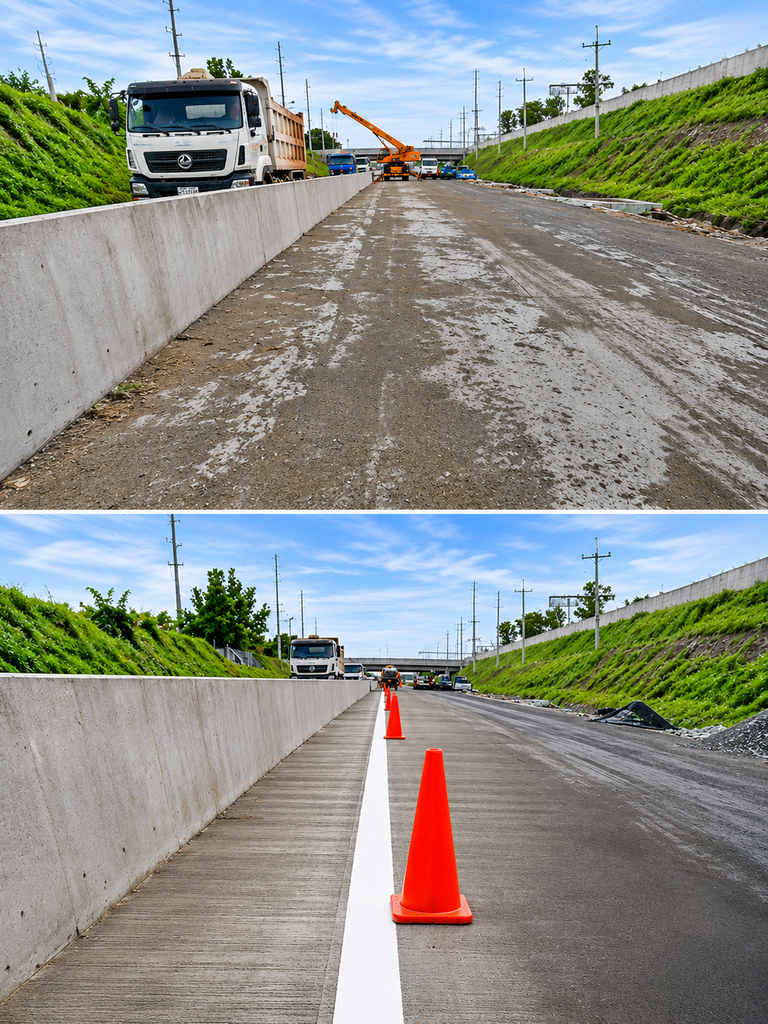
Understanding the manufacturing process behind durable, high-performance road markings and why choosing the right thermoplastic paint manufacturer matters.
Road markings play a critical role in maintaining road safety, guiding motorists, and improving traffic organisation. From highways and expressways to city streets and pedestrian crossings, these markings provide essential visual guidance for millions of road users every day.
But behind every visible road marking is a carefully developed material designed to withstand traffic, environmental exposure, and demanding pavement conditions.
One of the most widely used materials for permanent road markings is thermoplastic road marking paint. Known for its durability, quick application, and reflective properties, thermoplastic paint is widely utilised in road infrastructure projects.
However, its performance begins long before it reaches the road. It starts with the manufacturing process.
Understanding how thermoplastic road marking paint is manufactured provides valuable insight into material quality, product consistency, and the importance of working with a reliable thermoplastic paint manufacturer in the Philippines.
1. Understanding Thermoplastic Road Marking Paint
Thermoplastic road marking paint is a heat-applied pavement marking material formulated to create durable, highly visible markings on asphalt and concrete surfaces.
Unlike conventional traffic paint, which generally dries through solvent evaporation or water evaporation, thermoplastic material is heated until it reaches a molten state before application. Once applied, it cools and solidifies, forming a durable marking on the pavement.
Its formulation typically consists of several key components:
- Resins: Provide binding properties and influence adhesion, flexibility, and overall performance.
- Pigments: Provide colour, whiteness, and visibility.
- Fillers: Contribute to the material’s physical properties, consistency, and formulation.
- Glass beads: Help improve retroreflectivity by returning vehicle headlight illumination towards drivers.
- Additives: Support specific application and performance characteristics.
The interaction between these ingredients determines the finished product’s characteristics, making formulation and manufacturing consistency essential.
2. The Key Raw Materials Used in Thermoplastic Paint Manufacturing
The quality of thermoplastic road marking paint depends significantly on the selection and proportion of its raw materials.
Each component serves a particular purpose, and variations in material quality or formulation can influence the finished product.
A. Resins: The Binding Component
Resins are among the most important ingredients in thermoplastic paint manufacturing. They bind the different components together and contribute to the material’s adhesion, flexibility, and overall performance.
Two commonly used resin systems include:
Hydrocarbon Resin
Hydrocarbon-based thermoplastic formulations are commonly selected for their practical performance and value. They offer a suitable solution for road marking applications where reliable performance and cost efficiency are important considerations.
Alkyd Resin
Alkyd-based thermoplastic formulations are used in premium road marking applications. Depending on the formulation, they can provide desirable adhesion, whiteness, and performance characteristics.
The choice of resin system influences the finished material and should be aligned with the requirements of the road marking project.
B. Pigments: Achieving Visibility and Colour Consistency
Pigments provide the colour characteristics of thermoplastic road marking paint.
Titanium dioxide is commonly used in white thermoplastic formulations because of its high opacity and whiteness. Yellow pigments are used to achieve the required yellow appearance for designated road markings.
Proper pigment dispersion is important to achieve consistent colour throughout the finished material.
C. Fillers: Supporting Material Composition
Mineral fillers, such as calcium carbonate, are used in thermoplastic formulations to contribute to material composition, consistency, and physical properties.
Their particle characteristics and proportion in the formulation influence the finished product’s behaviour during manufacturing and application.
D. Glass Beads: Improving Road Marking Reflectivity
Glass beads are an important component of reflective road marking systems.
They work by refracting and reflecting light from vehicle headlights back towards the driver’s direction, improving nighttime visibility.
Glass beads may be incorporated into certain thermoplastic formulations or applied onto freshly laid thermoplastic markings as drop-on beads, depending on the road marking system and project requirements.
E. Additives: Fine-Tuning Performance
Various additives may be incorporated to improve specific material characteristics, such as flow, stability, processing behaviour, and application performance.
The appropriate combination depends on the intended formulation and applicable technical requirements.
3. How Thermoplastic Road Marking Paint Is Manufactured
Manufacturing thermoplastic road marking paint involves more than simply combining raw materials. It requires controlled formulation, appropriate processing conditions, and consistent quality management.
While specific production methods vary between manufacturers, the general process involves several important stages.
Step 1: Raw Material Selection and Inspection
Manufacturing begins with the selection and inspection of raw materials.
Resins, pigments, fillers, glass beads, and additives must meet the requirements established for the intended formulation.
Material quality is important because inconsistencies in raw materials can affect the finished product’s appearance, processing characteristics, and performance.
Step 2: Accurate Batching and Formulation
Once the raw materials have been selected, they are measured and prepared according to the product formulation.
Accurate batching helps maintain consistency between production runs.
The proportion of each ingredient is carefully established to achieve the intended characteristics of the thermoplastic material.
Different formulations may be developed depending on the resin system, colour requirements, application conditions, and relevant project specifications.
Step 3: Heating and Mixing
The selected materials undergo controlled heating and mixing to develop the thermoplastic compound.
During this stage, the resin system is processed with the other formulation components to achieve the required material consistency and distribution of ingredients.
Temperature management is particularly important. Inadequate processing may affect material uniformity, while excessive heat exposure may negatively influence certain ingredients.
The objective is to produce a consistent compound suitable for subsequent application.
Step 4: Homogenisation and Consistency Checks
After mixing, the compound must achieve a uniform composition.
Proper dispersion of pigments, fillers, and other ingredients helps minimise inconsistencies in the finished product.
Depending on the manufacturer’s quality control procedures, samples may be evaluated against established product specifications.
These checks help verify that the material meets the intended formulation and quality requirements.
Step 5: Cooling and Product Preparation
Once the thermoplastic compound has been processed, it undergoes preparation for cooling and solidification.
The material is then prepared in the appropriate form for handling, storage, transportation, and eventual application.
Proper product preparation helps maintain material integrity before it reaches the construction site.
Step 6: Packaging and Distribution
The finished thermoplastic road marking paint is packaged according to the product’s intended handling and storage requirements.
Packaging plays an important role in protecting the material during transportation and ensuring it can be efficiently handled by contractors and road construction teams.
From manufacturing facilities to project sites, reliable distribution helps ensure that materials are available when infrastructure projects require them.
4. Quality Control: What Makes a Reliable Thermoplastic Paint Manufacturer?
A reliable thermoplastic paint manufacturer does not focus solely on production volume. Product consistency, material performance, and compliance with applicable specifications are equally important.
For contractors and infrastructure developers, understanding the quality characteristics of thermoplastic road marking paint can help inform purchasing decisions.
Some important properties to consider include:
Softening Point
Indicates the temperature at which thermoplastic material begins to soften under specified test conditions. This property is important when evaluating the material’s suitability for different service environments.
Colour and Whiteness
Consistent colour and whiteness contribute to the visibility and appearance of road markings.
Flow and Application Characteristics
The material should demonstrate suitable flow and application behaviour when heated and applied using the appropriate equipment.
Adhesion
Proper adhesion helps the marking remain attached to the pavement surface under normal service conditions.
Drying and Setting Time
After application, thermoplastic material must cool and solidify sufficiently before the marked surface can be reopened to traffic. The actual setting time depends on application conditions and environmental factors.
Reflectivity
When used as part of a reflective road marking system, glass beads help improve nighttime visibility. Retroreflective performance depends on bead quality, application, embedment, and the overall marking system.
For projects requiring compliance with Department of Public Works and Highways (DPWH) specifications, contractors should verify the applicable requirements and supporting product documentation before procurement.
5. Why Local Manufacturing Matters in the Philippines
Choosing a local thermoplastic paint manufacturer in the Philippines can offer practical advantages for contractors, distributors, and infrastructure developers.
The country’s road network presents demanding operating conditions, including high temperatures, frequent rainfall, humidity, and varying traffic volumes.
These environmental and operational factors make material selection an important consideration for road marking projects.
Understanding Local Road Conditions
A manufacturer with experience in the Philippine market can better understand the practical requirements of local road construction and maintenance projects.
Product selection should consider pavement conditions, application requirements, environmental exposure, and applicable project specifications.
More Accessible Supply and Coordination
Working with a local manufacturer can support more direct coordination between suppliers, contractors, and project teams.
It can also provide opportunities for closer communication regarding product requirements, technical documentation, and supply schedules.
Supporting Infrastructure Development
Local manufacturing contributes to the country’s construction and infrastructure supply chain.
By supporting local production capabilities, the industry can strengthen domestic manufacturing, improve supply coordination, and contribute to the continued development of Philippine infrastructure.
For contractors sourcing thermoplastic road marking materials, these considerations make the choice of manufacturer an important part of project planning.
6. Choosing the Right Thermoplastic Paint Manufacturer in the Philippines
Selecting a thermoplastic paint supplier or manufacturer should involve more than comparing product prices.
Contractors and procurement teams should evaluate several factors before making a purchasing decision.
1. Manufacturing Capability
Determine whether the company manufactures its own products or primarily distributes materials from other sources.
Understanding the manufacturer’s capabilities helps establish confidence in its production and supply operations.
2. Product Range
Consider whether the manufacturer offers different formulations and solutions for varying project requirements.
Hydrocarbon-based and alkyd-based thermoplastic paints, for example, may serve different performance and budget considerations.
3. Technical Specifications
Review available product data sheets, technical documentation, and applicable compliance information.
Ensure that the materials meet the requirements established for the intended project.
4. Supply Reliability
Large-scale infrastructure projects require dependable material availability and coordination.
Evaluate the manufacturer’s ability to support project schedules and procurement requirements.
5. Industry Experience
Experience in road marking materials and infrastructure supply provides valuable insight into the technical and operational demands of road construction projects.
Ultimately, the right manufacturer should offer a combination of product quality, technical knowledge, reliable supply, and industry understanding.
7. Rua Seguridad: Supporting Better Roads Through Road Marking Solutions
As a Philippine-based road marking materials manufacturer and supplier, Rua Seguridad Corporation provides solutions for contractors, infrastructure developers, and organisations involved in road construction and maintenance.
With a focus on road marking materials and infrastructure solutions, Rua Seguridad supports projects that require dependable products and practical material solutions.
Its thermoplastic road marking paint portfolio includes:
Rua Edge – Hydrocarbon Thermoplastic Paint
Rua Edge is a value-for-money hydrocarbon-based thermoplastic paint developed for contractors and subcontractors seeking a practical road marking solution.
Its formulation is designed for quick melting and curing, and it is compatible with drop-on glass beads for reflective road marking applications.
Legacy Alkyd – Premium Reflective Thermoplastic Paint
Legacy Alkyd is an alkyd-based thermoplastic paint developed for projects requiring premium road marking performance.
Its product characteristics include superior whiteness and adhesion to asphalt and concrete surfaces, making it a suitable option for demanding road marking applications.
Both products are developed to address the requirements of road marking projects in the Philippine market, with applicable specifications and product documentation to be considered for each project.
Beyond thermoplastic paint, Rua Seguridad also supplies glass beads, preformed road markings, primers, and other road infrastructure materials.
By bringing together product knowledge and road marking solutions, Rua Seguridad aims to help contractors and infrastructure partners deliver better, safer, and smoother roads.
Conclusion: Quality Manufacturing Starts Before the Paint Reaches the Road
The performance of thermoplastic road marking paint begins long before it is applied to a pavement surface.
From raw material selection and formulation to processing, quality control, and packaging, every stage of manufacturing contributes to the characteristics and consistency of the finished product.
For contractors and infrastructure developers, choosing the right thermoplastic paint manufacturer is an important decision that can influence project quality, procurement efficiency, and long-term road marking performance.
As the Philippine road network continues to develop, the demand for dependable road marking materials and manufacturing capabilities remains essential.
Rua Seguridad Corporation is committed to empowering better, safer, and smoother roads through reliable road marking materials and infrastructure solutions.
Looking for a reliable thermoplastic paint supplier in the Philippines?
Get in touch with Rua Seguridad Corporation to discuss your project requirements and explore our thermoplastic road marking paint solutions.