
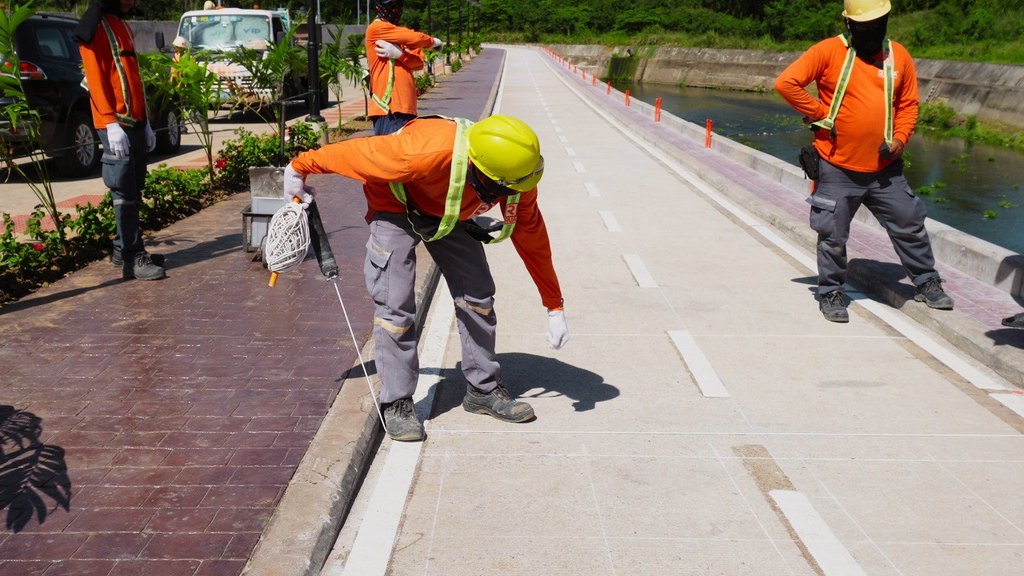
Road markings do more than divide lanes. They guide motorists, identify pedestrian crossings, improve traffic organization, and help make roads safer during both daytime and nighttime travel.
In the Philippines, selecting the right pavement marking materials is especially important. Intense sunlight, heavy rainfall, high traffic volume, and varying road surface conditions can affect the durability and visibility of road markings.
For road contractors, government project suppliers, and infrastructure developers, choosing the right materials means looking beyond the initial purchase price. The goal is to find a solution that meets project specifications, performs under local conditions, and delivers long-term value.
In this guide, RUA Seguridad explains the essential materials used in pavement marking projects and what contractors should consider before purchasing.
What Are Pavement Marking Materials?
Pavement marking materials are specialized products applied to asphalt or concrete surfaces to create traffic lines, directional arrows, pedestrian crossings, symbols, and other road markings.
The appropriate material depends on the road environment, traffic conditions, project requirements, and application method.
Common pavement marking materials include:
- Thermoplastic road marking paint for durable road lines and traffic symbols.
- Reflective glass beads to improve nighttime visibility through retroreflection.
- Road marking primer to support adhesion on suitable surfaces when required.
- Preformed road markings for ready-made symbols and markings that simplify installation.
- Pre-marking powder to guide accurate line layouts before application.
Understanding how these materials work together helps contractors select the right combination for their projects.
1. Choose Thermoplastic Road Marking Paint for Durability
Thermoplastic road marking paint is a heat-applied material that melts during preparation and hardens as it cools after application.
It is commonly used for lane lines, edge lines, pedestrian crossings, directional arrows, and other traffic markings.
For Philippine road projects, thermoplastic offers several practical advantages:
- Durability: Designed for road surfaces exposed to regular vehicle traffic and abrasion.
- Fast setting: The material solidifies as it cools, helping reduce the waiting time before traffic can resume, subject to site conditions.
- Visibility: Suitable formulations and application methods can deliver bright markings that help motorists identify road boundaries.
- Long-term value: Properly selected and applied materials can reduce the need for frequent remarking.
However, performance depends on more than the product itself. Surface preparation, application thickness, heating, traffic volume, and installation quality all influence service life.
When sourcing thermoplastic paint, contractors should review the technical data sheet, project specifications, and applicable Department of Public Works and Highways (DPWH) requirements.
2. Select the Right Formulation for Your Project
Not every road marking project has the same priorities. Some contractors need fast application and efficient material use, while others prioritize premium whiteness, reflectivity, and long-term performance.
RUA Seguridad offers different thermoplastic road marking solutions to support these needs.
Legacy Alkyd: Premium Road Marking Performance
RUA Legacy is an alkyd resin-based thermoplastic road marking paint designed for strong adhesion, superior whiteness, and reflective performance.
It is an option for contractors who prioritize quality and consistent road marking appearance.
Rua Edge: Value and Application Efficiency
Rua Edge is a hydrocarbon resin-based thermoplastic road marking paint designed for cost-conscious contractors who value fast melting, efficient application, and quick setting.
The appropriate product should be selected according to the project specifications, application requirements, and overall cost considerations.
Contractor tip: Compare products using technical specifications and expected performance—not price per bag alone. Material consumption, heating efficiency, application productivity, and maintenance requirements can all affect project economics.
3. Use Reflective Glass Beads to Improve Nighttime Visibility
A road marking can be visible during the day but less effective at night if it does not return enough light toward approaching drivers.
Reflective glass beads help address this challenge through retroreflection. When properly incorporated into or applied onto compatible road marking materials, the beads return vehicle headlight illumination toward the driver.
They are particularly relevant for road projects involving:
- Highways and major roads
- Lane lines and edge lines
- Pedestrian crossings
- Curves and intersections
- Roads where nighttime visibility is a priority
The correct bead type, application rate, embedment, and compatibility with the marking material should follow the product specifications and project requirements.
For contractors sourcing road marking materials in the Philippines, glass beads should be considered part of the overall marking system rather than an afterthought.
4. Check Whether Road Marking Primer Is Required
Adhesion is a critical factor in the performance of pavement markings.
On certain surfaces, particularly concrete, a compatible primer may be required to help the thermoplastic marking bond properly to the substrate. The need for primer depends on the surface, material formulation, and applicable specifications.
Before application, contractors should ensure that the pavement is properly prepared and free from dust, loose particles, oil, and other contaminants. Moisture conditions must also be suitable for the selected system.
Using a primer does not compensate for poor surface preparation. Likewise, skipping a required primer can compromise adhesion and increase the risk of premature marking failure.
Always check the manufacturer’s recommendations and project requirements before application.
5. Consider Preformed Road Markings for Symbols and Special Applications
Some projects require more than straight lines. Directional arrows, road text, pedestrian symbols, and other customized markings can require careful layout and installation.
Preformed road markings provide ready-made thermoplastic sheets for selected applications. Depending on the product, they may include glass beads and a compatible primer to support installation.
They can be useful when contractors need consistent symbols, defined shapes, and a practical alternative to forming every marking manually.
As with other marking systems, the substrate must be suitable, and installation must follow the manufacturer’s instructions.
6. Account for Philippine Weather and Road Conditions
Pavement marking materials in the Philippines must perform under conditions that vary by location and season.
Intense heat and sunlight
Prolonged exposure to sunlight can contribute to fading and material deterioration. Selecting appropriate pigments, binders, and formulations helps support lasting appearance and performance.
Heavy rainfall and humidity
Moisture can interfere with adhesion during installation, while wet-weather visibility is an important road safety consideration.
Thermoplastic should only be applied when the road surface and weather conditions meet the product’s requirements. A surface that appears dry may still retain moisture.
Heavy traffic and abrasion
Busy urban roads, highways, intersections, and industrial access roads experience different levels of wear.
Material selection should account for traffic volume, vehicle loading, road geometry, and the expected maintenance schedule.
The key takeaway: There is no single product selection that fits every road. The right solution combines suitable materials, proper installation, and compliance with the specifications governing the project.
7. Verify Project Specifications and Quality Requirements
For public infrastructure projects, contractors must ensure that the selected materials meet the applicable contract requirements and current DPWH specifications.
Before placing an order, review:
- Required material type and color
- Applicable technical specifications and test requirements
- Marking dimensions and application thickness
- Glass bead requirements, where applicable
- Surface preparation and primer requirements
- Packaging, delivery schedule, and material availability
- Product documentation and quality records
Do not assume that every thermoplastic formulation or glass bead product automatically meets every project specification. Verify the actual documentation against the requirements of the project.
Careful material selection helps contractors reduce avoidable delays, support consistent workmanship, and protect their investment in road infrastructure.
8. Choose a Reliable Road Marking Materials Supplier in the Philippines
Reliable supply is essential when project schedules depend on the timely delivery of materials.
When evaluating a road marking materials supplier, consider more than the quoted price. Look at product range, technical assistance, consistency, delivery arrangements, and the supplier’s understanding of local road conditions.
RUA Seguridad Corporation is a 100% Filipino-owned manufacturer and provider of road marking and road infrastructure solutions, established in 2006.
Our road marking portfolio includes:
- Legacy Alkyd thermoplastic road marking paint
- Rua Edge hydrocarbon thermoplastic road marking paint
- Reflective glass beads
- Road marking primer
- Preformed road paint
- Pre-marking powder
We also provide road marking application services and equipment solutions to support different project requirements.
Through our nationwide distribution network and regional sales support, we work to make road marking materials more accessible to contractors and project partners across Luzon, Visayas, and Mindanao.
Whether you are preparing for a highway project, municipal road improvement, or private infrastructure development, selecting the right materials is an important step toward delivering durable, visible, and well-executed road markings.
Frequently Asked Questions
What are the most common pavement marking materials used in the Philippines?
Common materials include thermoplastic road marking paint, reflective glass beads, road marking primer, and preformed road markings. The appropriate combination depends on the project specifications, pavement surface, and application requirements.
Is thermoplastic road marking paint suitable for Philippine roads?
Thermoplastic is widely used for road markings because it can provide a durable, visible marking when the formulation, application, and maintenance are appropriate for the road conditions. Contractors should verify suitability against the specific project requirements.
Are glass beads necessary for road markings?
Glass beads are used to provide retroreflectivity and improve nighttime visibility. Whether they are required, and the appropriate type and application method, depend on the marking system and project specifications.
Is primer always required before applying thermoplastic paint?
No. Primer requirements depend on the pavement surface, product formulation, and applicable project specifications. Contractors should follow the manufacturer’s technical guidance and the project requirements.
Where can I buy road marking materials in the Philippines?
RUA Seguridad supplies thermoplastic road marking paints, glass beads, primer, preformed road paint, and other road marking solutions. Contact our team to discuss product requirements, technical documentation, and availability for your project.
Build Better Roads with the Right Materials
Successful road marking projects begin with informed material selection.
By considering durability, reflectivity, adhesion, local weather conditions, and project specifications, contractors can make better purchasing decisions and support safer, more reliable road infrastructure.
Looking for pavement marking materials in the Philippines?
Contact RUA Seguridad Corporation to discuss your road marking requirements and find a solution suited to your project.
RUA Seguridad Corporation — Empowering Better, Safer and Smoother Roads.